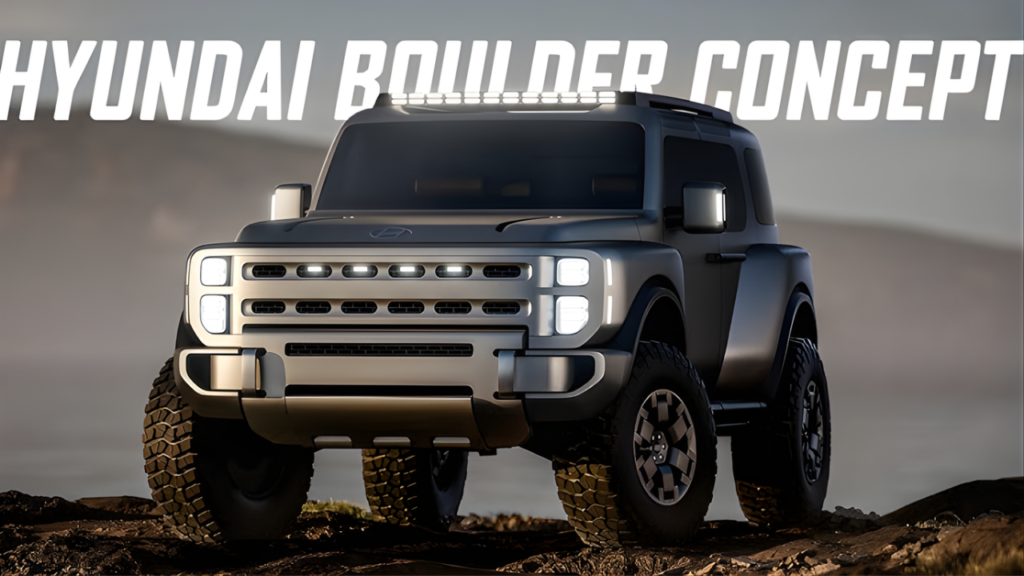
The Hyundai Boulder Concept is more than just a bold design experiment-it quietly signals a possible shift in the strategy of Hyundai Motor Company. While its rugged, boxy design may remind you of iconic off-roaders, the real highlight lies underneath: a fully boxed ladder-frame platform.
For Indian buyers, this raises an important and exciting question-could Hyundai be preparing to enter the hardcore SUV segment currently dominated by models like the Toyota Fortuner and the Land Rover Defender?
What Makes the Hyundai Boulder Concept Unique?
At first glance, the Boulder Concept looks aggressive and adventure-ready. But beyond its appearance, it represents a completely different engineering direction for Hyundai.
Unlike the brand’s current SUVs, which focus on comfort and urban usability, this concept leans heavily towards strength, durability, and off-road performance.
Key Highlights
- Built on a body-on-frame (ladder-frame) chassis
- Designed for serious off-road capability
- Strong, muscular and boxy SUV stance
- High ground clearance and rugged styling
- Focus on utility and toughness over luxury
This clearly shows that Hyundai is exploring a new category beyond its usual comfort-oriented vehicles.
Hyundai’s Current SUV Lineup in India
Hyundai has already built a strong presence in India with its monocoque-based SUVs. These vehicles are designed to deliver a balanced mix of comfort, features, and efficiency, which suits urban and family buyers perfectly.
- Hyundai Creta
- Hyundai Alcazar
- Hyundai Tucson
These SUVs are known for their smooth driving experience, modern features, and wide appeal.
Monocoque vs Ladder-Frame: Key Differences
To better understand why the Boulder Concept matters, it’s important to know the difference between Hyundai’s current approach and this new direction.
| Feature | Monocoque SUVs | Ladder-Frame SUVs |
|---|---|---|
| Structure | Single integrated body | Separate chassis and body |
| Ride Quality | More comfortable | Slightly stiffer |
| Off-Road Ability | Limited | Excellent |
| Durability | Moderate | Very high |
| Usage | City & highway | Tough terrain & heavy-duty |
This table clearly explains why ladder-frame SUVs are preferred for serious off-roading and rugged usage.
The Missing Piece in Hyundai’s Portfolio
While Hyundai dominates the urban SUV space, it currently lacks a true off-road, ladder-frame SUV. This creates a noticeable gap in its lineup.
In India, vehicles like the Toyota Fortuner and the Land Rover Defender are not just cars-they are symbols of power, lifestyle, and status. Even though this segment is smaller in volume, it carries strong brand value and aspirational appeal, which Hyundai has yet to tap into.
Could Hyundai Launch a Rugged SUV in India?
At present, the Boulder Concept is not officially planned for production, especially not for India. However, it strongly indicates that Hyundai is experimenting with a utility-focused SUV platform.
If Hyundai decides to expand its identity beyond urban crossovers, this concept could evolve into:
- A global off-road SUV
- A competitor to lifestyle SUVs like Fortuner and Defender
- A new direction for Hyundai’s premium SUV strategy
While it may take time, the idea itself is significant.
Challenges Hyundai May Face
Entering this segment will not be easy for Hyundai. The company will have to overcome several challenges to compete with established players.
- Building strong off-road credibility
- Competing with trusted brands like Toyota
- Balancing comfort with rugged performance
- Pricing the vehicle competitively
However, Hyundai’s strong global presence and engineering capabilities could help it succeed if executed well.
Final Verdict
The Hyundai Boulder Concept may still be a concept, but it represents something much bigger-a potential shift in Hyundai’s SUV strategy. It shows that the brand is thinking beyond city-friendly SUVs and exploring the world of rugged, adventure-ready vehicles.
For Indian buyers, this could open up exciting possibilities in the future, especially in a segment that blends performance, presence, and lifestyle appeal.